
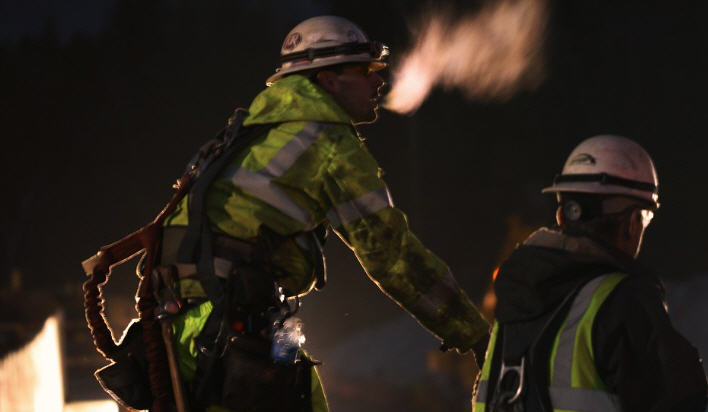
Tips to deal with frostbite, hypothermia and dehydration.
Frostbite
Superficial Frostbite
What to look for
• White, waxy, or grayish-yellow patches
• Skin is cold, numb and stiff
• Underlying tissue is pliable when depressed
How to treat
• Move the victim to a warm, dry area
• Loosen any constrictive clothing
• Place dry, sterile gauze between toes and fingers
• Slightly elevate the affected part
• Seek medical attention immediately
More than an hour from medical help?
• Place the frostbitten part in warm—not hot—water (102° to 106° F). Rewarm for 20 to 40 minutes (until tissues soften)
Deep Frostbite
What to look for
• Waxy, pale, solid skin
• Blister may appear
How to treat
• Move the victim indoors immediately
• Seek medical attention
Hypothermia
What to look for
• Change in mental status
• Uncontrollable shivering
• Cool abdomen and a low body temperature
• If severe, muscles may be rigid, skin dark and puffy, irregular heart and respiratory rates and/or unconsciousness
How to treat
• Move the victim out of the cold
• Place in a horizontal (flat) position
• Replace wet clothing with dry
• Cover the victim’s head
• Call for immediate medical attention
• Use blankets, pillows, towels or newspapers to insulate the victim
• Provide a warm, sweet drink— avoid caffeine or alcohol
• Give artificial respiration or CPR (if you are trained) as needed
Dehydration
What to look for
• Weakness, dizziness, fatigue and dry mouth
• Provide a warm, sweet drink— avoid caffeine or alcohol
• If severe, seek medical attention
Safety precautions
• Dress in layers
• Wear synthetic fabrics close to the skin
• Wear waterproof or water-repellent clothing
• Brush off snow regularly to stay dry
• Drink warm, sweet liquids— avoid caffeine or alcohol
• Eat warm, solid foods
• Work in “buddy pairs” to ensure each other’s safety
• Go in at regular intervals to rest and warm up
